
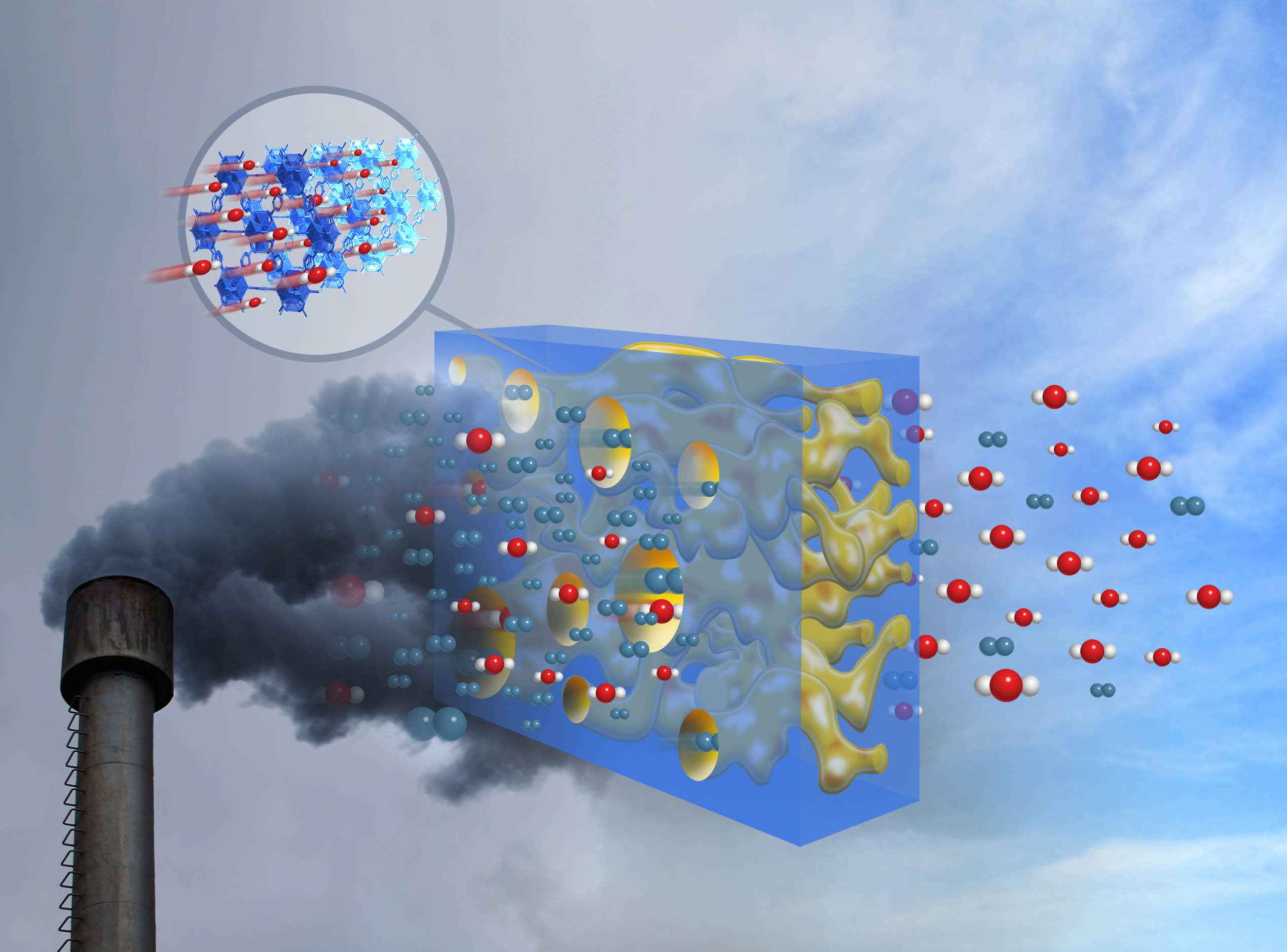
The increasing levels of carbon dioxide (CO2) in the atmosphere have become a significant concern for the global community. As a major contributor to climate change, the need for innovative solutions to capture and reduce CO2 emissions has never been more pressing. Companies and researchers worldwide are exploring a variety of methods to address this environmental challenge. This article delves into some cutting-edge technologies and approaches that are paving the way for more efficient and sustainable carbon dioxide capture solutions.
Advanced Material Technologies
One of the promising areas in CO2 capture technology is the development of advanced materials. These materials are designed to selectively capture CO2 while allowing other gases to pass through. Innovative materials include:
- Metal-Organic Frameworks (MOFs): These are porous materials that have a high surface area, which enhances their ability to absorb CO2.
- Zeolites: Natural or synthetic minerals that are highly effective in trapping CO2 due to their unique crystalline structure.
- Amine-Based Solvents: These solvents react with CO2 to form a compound that can be easily separated and stored.
Biological Approaches to Carbon Capture
Biological methods offer a sustainable approach to capturing CO2. These methods harness natural processes to sequester carbon, including:
- Bioenergy with Carbon Capture and Storage (BECCS): This involves growing biomass, which absorbs CO2, and then using it to generate energy. The CO2 emitted during energy production is captured and stored underground.
- Algae Cultivation: Algae are effective at absorbing CO2 and can be used in bioreactors to capture emissions from industrial sources.
For more information on how these biological methods contribute to carbon dioxide capture, visit our detailed exploration of BECCS and algae-based systems.
Innovative Engineering Solutions
Direct Air Capture (DAC)
Direct air capture is a groundbreaking engineering solution that involves extracting CO2 directly from the ambient air. This method uses chemical reactions to capture CO2, which can then be stored or utilized in various applications. The technology requires significant energy input; however, advancements in renewable energy are making DAC more feasible and sustainable.
Carbon Capture and Utilization (CCU)
Rather than simply storing CO2, carbon capture and utilization focuses on converting captured carbon into useful products. This approach can potentially create a circular carbon economy where CO2 emissions are continuously reused. CCU applications include:
- Production of Fuels: Captured CO2 can be converted into synthetic fuels, reducing the reliance on fossil fuels.
- Building Materials: CO2 can be used to manufacture concrete and other construction materials, locking carbon away in long-lasting structures.
- Chemical Manufacturing: CO2 can serve as a raw material in producing chemicals such as methanol.
Explore how carbon dioxide capture and utilization strategies are transforming industries and contributing to sustainable development.
Challenges and Future Prospects
Despite the advancements in CO2 capture technologies, several challenges remain. Key issues include the cost of implementation, scalability of technologies, and energy consumption. However, ongoing research and development are addressing these challenges, making carbon capture increasingly viable.
The future of carbon capture is promising, with significant potential for integration into various industries. As technology continues to evolve, the efficiency and effectiveness of these solutions are expected to improve, driving wider adoption and greater environmental impact.
For more insights into the latest developments in carbon dioxide capture technology, stay informed through industry updates and scientific research.